

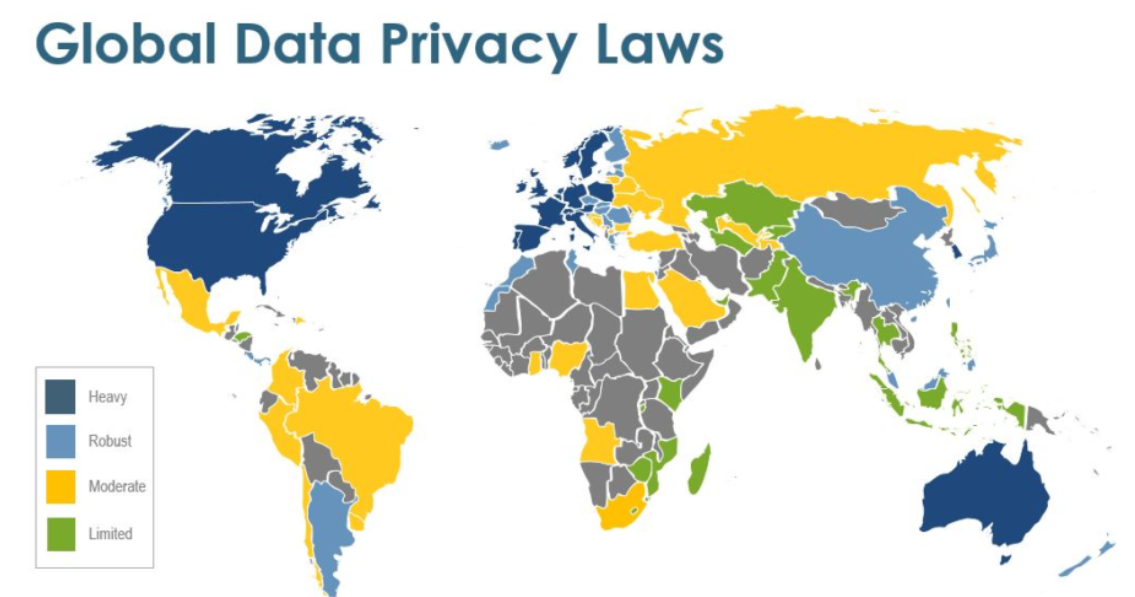
Kenya & Global Data Protection: GDPR, EU Framework & More
Kenya's Data Protection Act, 2019 does not exist in isolation. It was deliberately built to mirror international standards, and Kenya is now in the final stages of what would be a landmark moment for African data governance: a formal data adequacy decision with the European Union, expected to be finalized around September 2026, which would make Kenya the first African country to hold that status. For any business operating across borders, whether a multinational with a Kenyan office, a Kenyan company serving European clients, or an outsourcing firm handling data that touches multiple jurisdictions, understanding how these international frameworks connect to Kenyan law is no longer optional context, it is directly relevant to how data can legally move in and out of the country.
This guide walks through how GDPR, the EU US Data Privacy Framework, the African Union's Malabo Convention, and other international recognition mechanisms intersect with Kenya's Data Protection Act, and what the pending EU adequacy decision means in practical terms.
Kenya's Data Protection Act Was Built on GDPR's Architecture
Kenya's Data Commissioner has been explicit that the country's Data Protection Act closely mirrors the GDPR, sharing similar principles for lawful processing, comparable data subject rights, a matching seventy two hour breach notification standard, and a broadly aligned structure for cross border transfers built around adequacy, safeguards, and consent. This is not a coincidence. It was a deliberate drafting choice that has paid off strategically, since it substantially narrowed the gap the EU needed to assess when evaluating Kenya for adequacy status, one of the reasons Kenya's adequacy dialogue, launched in 2024, has moved faster than similar discussions with other countries.
For businesses, this alignment means a compliance program built to GDPR standards will generally satisfy most of Kenya's requirements as well, with targeted local adjustments, chiefly ODPC registration and Kenya specific notification and documentation requirements, rather than an entirely separate framework.
The Kenya EU Adequacy Decision: Where Things Stand
This is the most significant international development affecting Kenyan data protection right now. In May 2024, Kenya and the EU launched the first Adequacy Dialogue between the European Union and an African nation, aimed at determining whether Kenya's data protection regime offers a level of protection essentially equivalent to the EU's own standard. As of mid 2026, Kenyan officials describe the agreement as being in its final stages, with President William Ruto publicly setting September 2026 as a target date for completion, following which the decision would proceed to the European Parliament for ratification.
If finalized, an adequacy decision would allow personal data to flow freely between Kenya and EU member states without the additional safeguards, such as Standard Contractual Clauses or Binding Corporate Rules, currently required for most transfers. This would be a major practical shift for the business process outsourcing, fintech, cloud computing, and digital services sectors that make up a significant part of Kenya's growing digital economy, all of which currently carry the compliance overhead of documenting appropriate safeguards for every transfer to the EU.
It is worth being precise about what adequacy actually means and what it does not. An EU adequacy decision would ease transfers from the EU into Kenya. Separately, and just as relevant for many Kenyan businesses, Kenya's own Data Commissioner has the power to issue its own adequacy determinations recognizing other countries, meaning a full picture of compliant cross border data flow requires looking at both sides of the relationship, not just the EU's assessment of Kenya.
Kenya's Recognition by Other Jurisdictions
The EU dialogue is the most prominent, but not the only international recognition Kenya has received or is pursuing. Botswana's Transfer of Personal Data Order recognizes Kenya as providing adequate data protection standards, placing Kenya among a defined list of countries Botswana considers safe destinations for personal data. The United Kingdom has also indicated it is prioritizing a potential adequacy arrangement with Kenya as part of its broader post GDPR approach to international data transfers, conducted separately from the EU process since the UK now runs its own adequacy regime following its departure from the EU.
These recognitions matter beyond their immediate legal effect. Each one strengthens Kenya's broader credibility as a jurisdiction with a mature, internationally aligned data protection framework, which in turn supports the country's case in ongoing and future adequacy discussions with other trading partners.
The EU US Data Privacy Framework and Its Relevance to Kenyan Businesses
The EU US Data Privacy Framework, adopted in 2023 as a replacement for the earlier Privacy Shield arrangement struck down by European courts, allows personal data to flow from the EU to US companies that have self certified compliance with the framework's requirements. While this framework does not directly involve Kenya, it matters to Kenyan businesses in a specific, practical way: many Kenyan companies rely on US based cloud providers, software platforms, and payment processors that also serve European clients, and understanding whether a given US vendor is certified under the Data Privacy Framework affects how data flows through that vendor's infrastructure, including any Kenyan data that passes through US hosted systems on its way to or from European operations.
The framework has also faced ongoing legal challenges in European courts, echoing the pattern that struck down its predecessor, which means Kenyan businesses relying on US vendors for data that ultimately touches EU data subjects should treat the framework's status as something to monitor rather than a permanently settled arrangement.
The Malabo Convention and Regional African Standards
Beyond its relationship with Europe, Kenya's data protection framework is also shaped by the African Union Convention on Cyber Security and Personal Data Protection, commonly known as the Malabo Convention, which sets out regional standards for data protection and cybersecurity across African Union member states. Ratification of or alignment with the Malabo Convention is one of the factors Kenya's own Data Commissioner considers when assessing whether a country or region offers adequate protection for the purposes of cross border transfers under Kenyan law.
This regional dimension matters for Kenyan businesses with operations elsewhere in East Africa, since data transfers to neighboring countries such as Uganda, Tanzania, or Rwanda are not automatically treated as safe simply because they are regional neighbors. The same adequacy, safeguards, or consent based analysis that applies to a transfer to Europe or the United States applies to a transfer to a regional data center, unless and until the ODPC has made a specific adequacy determination for that jurisdiction.
What This Means for Multinationals and Foreign Businesses Operating in Kenya
For a multinational with a Kenyan subsidiary or a foreign company serving Kenyan customers, the practical takeaway is that Kenya's international standing is actively improving, but has not yet reached a settled endpoint. Until the EU adequacy decision is finalized and ratified, transfers between Kenya and the EU still require a documented legal basis, appropriate safeguards, necessity, or consent, under Section 48 of the Data Protection Act. Businesses relying on US vendors need to understand where those vendors' data flows intersect with EU obligations through the Data Privacy Framework. Businesses with regional African operations need to assess each cross border transfer on its own terms rather than assuming regional proximity implies adequacy.
Building a compliance program now that anticipates likely adequacy, while maintaining proper documentation for the interim period, positions a business well for the transition once Kenya's EU adequacy decision is finalized, rather than requiring a compliance overhaul at that point.
Why This Requires Specialized Cross Border Expertise
Very few legal matters require tracking developments across as many moving parts simultaneously: Kenyan statute and ODPC guidance, evolving EU adequacy status, the legal fate of the EU US Data Privacy Framework, regional African standards under the Malabo Convention, and bilateral recognitions like Botswana's and the UK's. A business trying to build a durable international compliance program needs counsel that follows all of these threads together, rather than treating each jurisdiction as a separate, disconnected question.
Firms such as Kathurima N Advocates work specifically at this intersection, helping Kenyan businesses expanding internationally and multinationals operating in Kenya build data transfer strategies that hold up under current requirements while anticipating where Kenya's international standing, particularly the pending EU adequacy decision, is heading next.
Final Thoughts
Kenya's data protection framework is entering a genuinely significant period internationally, with a prospective EU adequacy decision that would make it the first African country to reach that status, alongside existing and developing recognition from Botswana, the UK, and its role within the African Union's Malabo Convention framework. Businesses operating across any of these borders benefit from treating international data protection not as a fixed set of rules to check off once, but as an evolving landscape worth monitoring closely, since the compliance requirements for moving data in and out of Kenya are likely to look meaningfully different within the next year than they do today.

0 Comments
No comments yet — be the first to share your thoughts.
Leave a Comment
Your email address will not be published. Comments are reviewed before appearing.